

03 Dec Christmas Dangers and Pet Emergencies Over the Holidays
Christmas Dangers and Pet Emergencies Over the Holidays
The festive season is a magical time in London – twinkling lights on every street, cosy evenings, and plenty of delicious food. But while we’re enjoying the celebrations, our pets often see Christmas very differently… shiny objects, intriguing smells, and tempting treats!
At your friendly local independent veterinary practice, we want to help keep your furry family members safe. If, however, the worst should happen over the festive season, we are here for you 24/7, 365 days of the year, as inner London’s only independently owned emergency vet, overnight patient care and advanced referral centre. You don’t need to be a client to use our services. Whilst we hope you won’t need us, read on for our top tips to keep your pets safe – should you need us, our emergency information is below.
Decorations
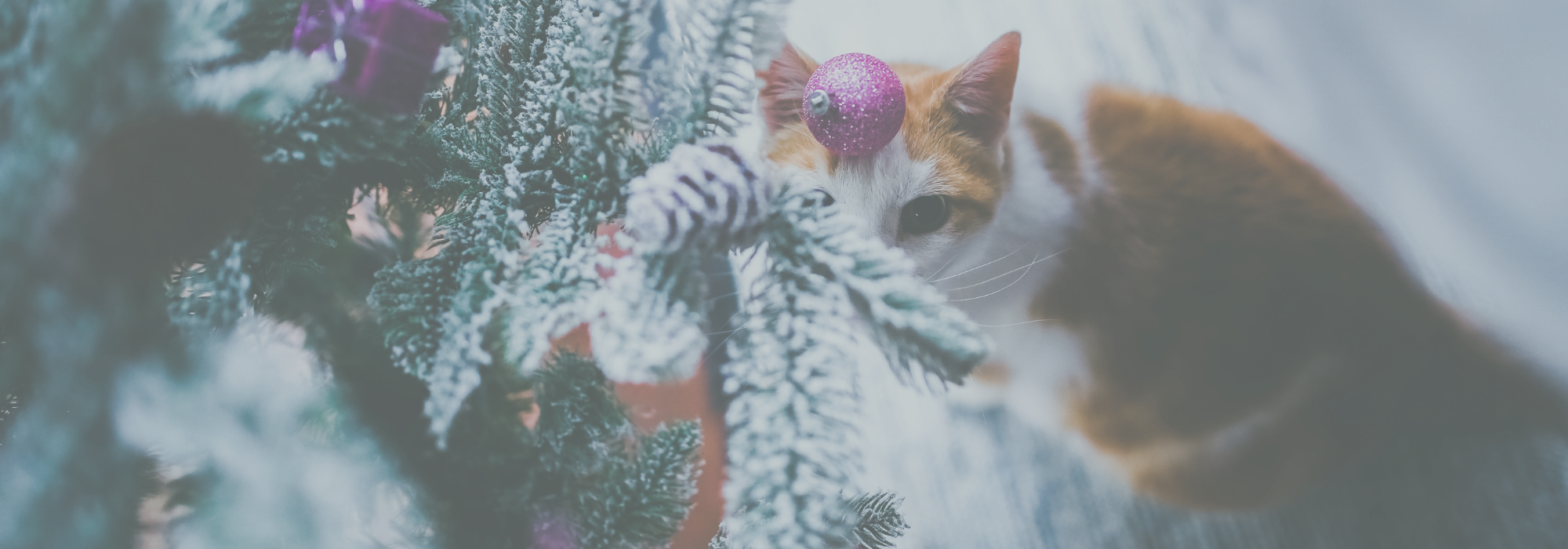
Tinsel and ribbons are a great source of fun until ingested, which is more common than you may think at this time of year! This can cause dangerous intestinal blockages. In addition, baubles and ornaments can shatter when knocked off of tree branches, causing cuts, and similarly, plastic ornaments can cause upset stomachs when chewed.
Where you can, opt for tinsel-free trees and keep those fragile decorations as high up and secure as possible.
Real Christmas Trees
If you love the look and scent of a real tree, be mindful of how accessible the water may be in your tree stand. A real tree may contain preservatives, bacteria and even toxic fertiliser residue. It’s best to ensure the base is covered with a pet-safe barrier to avoid curious pets sampling a taste. Pine needles also often end up in paws and between paw pads, so be sure to keep on top of those dropped needles.
Toxic Foods
It’s no secret that our homes are filled with delicious treats at this time of year, but many of our festive favourites can be harmful to pets. Chocolate: the darker the chocolate, the more toxic. Be sure not to leave chocolates unsupervised, as they can be very tempting and make your pet extremely unwell. Raisins, sultanas and currants are found in everything from our mince pies to stollen and Christmas cake, which are all toxic to dogs and can be potentially harmful to cats.
It isn’t just the treats, though – does anyone else’s pet love a Christmas dinner? Onions, garlic and leeks are again found in so many of our seasonal dishes, and can cause serious damage to our pets’ red blood cells, so be sure of what and how much you are sharing.
Finally, the main event! The Christmas centrepiece. Remember, never feed your pet turkey bones as they can splinter and cause serious internal damage, from tears to blockages. If you’re sneaking your pet some turkey skin, a pig in a blanket or even just some general meaty leftovers, whilst a little is usually fine, the richness can cause pancreatitis, which is a painful and potentially serious condition, so perhaps consider a pet-safe bowl. This may consist of lean meats and unseasoned pet-safe veggies instead. This will mean they don’t miss out on the feast and can also indulge a little – it is Christmas after all!
Festive Plants
London homes often fill up with traditional seasonal plants at this time of year (we are all hoping for some extra kisses from our pooch under the mistletoe!), but beware:
- Poinsettia – mild irritant to the mouth and stomach
- Mistletoe – can cause vomiting, drooling, and drowsiness
- Holly – spiky leaves + toxic berries = double trouble
- Lilies – extremely toxic to cats, even in small amounts
Remember to keep toxic plants out of reach and maybe consider a pet-safe alternative.
Lights and Electrical Cables
Some pets also love batting dangling light wires under the tree. Chewing cables can cause burns or electrical shock. Where you can, use cable covers and turn lights off when unsupervised.
Holiday Stressors
While we’re busy with last-minute gifts or perfecting the turkey cooking time, the noise and extra activity can feel overwhelming for some pets. Many enjoy the excitement – rustling wrapping paper, tempting smells, and extra people to play with – but others may find it stressful.
If you’re hosting or bringing your pet to someone else’s home, make sure everyone knows when your pet needs space (children may need a gentle reminder). Provide a quiet, familiar area with their bed and a few toys so they can relax when needed. Regular outdoor breaks and keeping their routine as consistent as possible will also help them feel calm and secure throughout the festivities.
Not sure if they are stressed? Keep a watchful eye open for these signs:
- Hiding
- Pacing
- Reduced appetite
- Excessive grooming (cats)
- Barking or clinginess (dogs
Cold Weather
London winters can be wet, windy, cold and icy! Remember:
- Salt & grit can irritate paw pads. They may require a paw wash on your arrival home to rinse away debris.
- Dark evenings increase accident risks, so consider reflective collars or coats for vulnerable pets.
- Antifreeze (ethylene glycol) is highly toxic, even in small amounts, and can spill on pavements. Be sure to clean up any residue as quickly as possible. Even a pet walking through a spillage and later cleaning their paws will ingest enough to make them unwell.
Emergencies
Finally, hopefully you will make it through the festive season unscathed, but perhaps you are not sure if your pet urgently needs to see a vet. Here is a list of common pet emergencies that require urgent veterinary attention!
- Hit by a car or other severe trauma
- Fall from a height
- Inability to urinate
- Vomiting or diarrhoea associated with severe weakness
- Collapse
- Markedly bloated abdomen
- Hypothermia
- Inability to breathe or choking on a foreign object
- Animal attack or bite
- Difficulty giving birth
- Eye injury
- Severe cut or profuse bleeding
- Open fracture
- Loss of use of one or more limbs
- Prolonged seizure (time and call out of hours if recurrent or one lasts over 3 minutes)
Whilst these can happen at any time of year, the more common festive emergencies are:
- Ingestion of toxic foods (chocolate, for example).
- Vomiting repeatedly
- Unusually lethargic
- Difficulty breathing
- Sudden neurological changes (unsteady on feet or limited coordination)
- Ingestion of a foreign object
Fast treatment can make all the difference. Should you need us in an emergency, we arrange emergency appointments after normal clinic hours at our 24-hour centre in Fulham. Please do not attend the clinic with any pet emergencies without calling first. Call 020 8167 4477 (Chiswick) or 020 3011 1205 (Fulham) in the case of an emergency. All calls are forwarded to our Fulham 24-hour centre when the clinics are closed for routine cases.
We would like to wish you and your pets a wonderful and safe Christmas holiday.
We’re here to help your pets enjoy the festive season as much as you do. With a little preparation and awareness, you can keep your furry companions safe, comfortable, and full of Christmas cheer.
If you have any concerns over the holidays or need advice, don’t hesitate to reach out – we’re always happy to help.
Sorry, the comment form is closed at this time.