

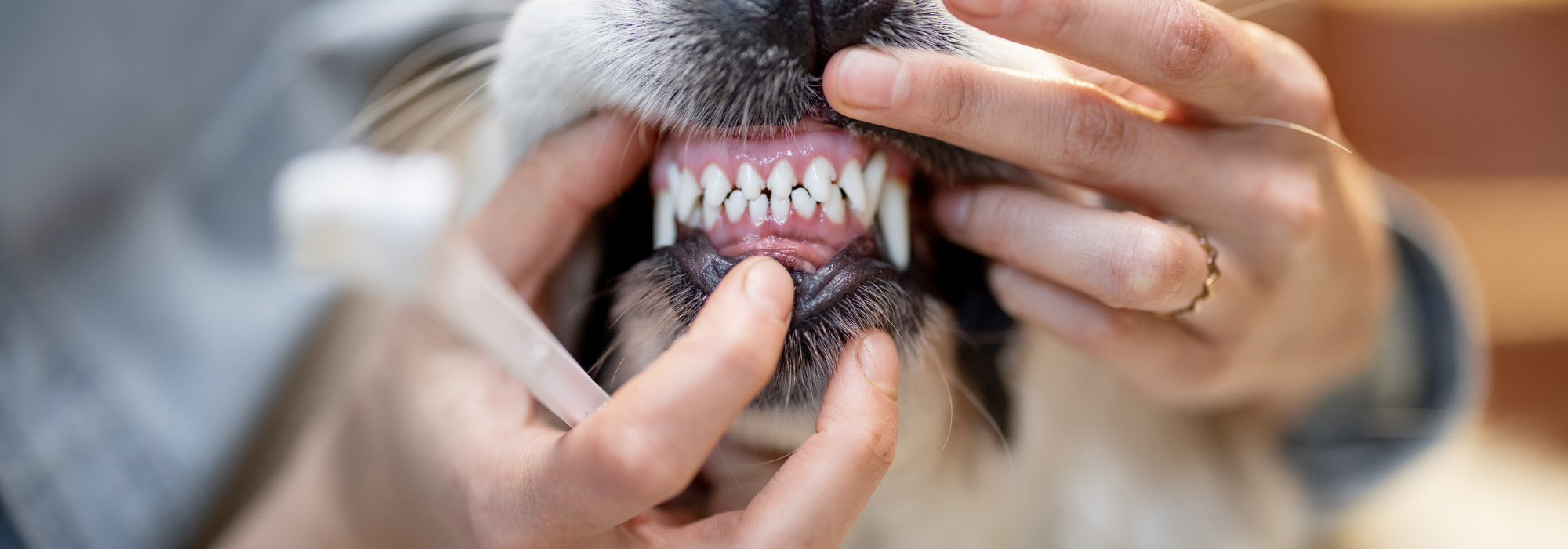
26 Jan How do I maintain good dental health for my pet?
How do I maintain good dental health for my pet?
Recently, we posted a blog about the importance of pet dental health. You can read the blog here. We covered why good dental health is so important for our pets, the signs your pet may require a dental check-up or treatment, and which pets may be at higher risk. But how do you maintain good dental health in the first place? Read on to find out!
Dental health is one of the most overlooked aspects of pet care. Poor oral hygiene doesn’t just cause bad breath; it can lead to pain, infections, tooth loss, and even serious organ disease. It often comes as a surprise to pet owners to hear that bad breath isn’t normal; it is actually the most reliable and common early warning sign that your pet requires dental attention.
The good news? With a little routine care at home and regular veterinary checkups, you can keep your pet’s teeth and gums healthy throughout their life. Let’s break down the essentials of dental care for dogs, cats, and rabbits, each of whom has very different dental needs.
Dental care for dogs
When food and bacteria build up on your dog’s teeth, they form plaque. If plaque isn’t removed, it hardens into tartar, leading to gum inflammation (gingivitis) and eventually periodontal disease. Advanced dental disease can cause:
- Pain and difficulty eating
- Loose or missing teeth
- Chronic infections
- Bacteria spreading to the heart, liver, and kidneys
Dogs are very good at hiding pain, so dental disease often goes unnoticed until it becomes severe.
How to maintain good dental hygiene for dogs
1. Tooth brushing (Gold Standard)
Daily brushing is the most effective way to prevent dental disease. We appreciate that this can be labour-intensive, but even brushing a few times a week can make a significant difference.
- Use dog-specific toothpaste (never human toothpaste).
- A soft-bristled toothbrush works well.
- Start slowly and make it a positive experience with praise and rewards.
2. Dental chews and toys
Dental chews work through a combination of mechanical abrasion (scraping teeth as the dog chews) and sometimes active ingredients (such as enzymes or polyphosphates) that help break down plaque, while also stimulating saliva to rinse the mouth, reducing tartar and freshening breath. These are a supplement, not a replacement, for brushing. Chat with our team for recommendations (you can even check out our pet shop!) and avoid overly hard items that can crack teeth and cause further damage!
3. Dental diets
Some prescription or dental-specific diets are designed to clean teeth as your dog chews. These can be especially helpful for dogs that don’t tolerate brushing well. Dental diets for dogs work by using specially designed, sometimes larger kibble pellets, with unique textures that create a mechanical “scrubbing” action as the dog chews. This physically scrapes plaque and tartar off teeth. Some formulas also contain ingredients that bind minerals to prevent tartar formation and to disrupt bacterial film. This improves oral hygiene by cleaning tooth surfaces and reducing plaque buildup, especially on back teeth, though they require the dog to chew thoroughly for effectiveness.
4. Professional dental cleaning: By your vet
Just like humans, dogs benefit from professional dental cleaning (scale and polish), which is performed by a vet under anaesthetic. These cleanings allow for:
- Removal of tartar above and below the gumline
- Full oral examination
- Dental x-rays to detect hidden problems
Your vet will recommend how often cleanings are needed based on your dog’s breed, age, and dental health.
Breeds at higher risk
Certain breeds will be at higher risk of dental issues, often due to their anatomy. Small and toy breeds (such as Chihuahuas, Yorkshire Terriers, and Poodles) are especially prone to dental disease due to crowded teeth. However, all dogs, regardless of size or breed, need dental care.
Dental care for cats
Cats commonly suffer from dental disease, including gingivitis and tooth resorption, yet signs can be subtle. Again, cats are masters of hiding pain, and we are also less likely to check our cats’ teeth than our dogs, as dogs tend to be more forthcoming with kisses!
- Brushing teeth (even a few times a week) using cat-safe toothpaste – see above.
- Dental treats or prescription diets formulated to reduce plaque – see above.
- Routine oral exams during veterinary visits—many problems are only visible with a proper exam.
What are the key signs to be aware of?
- Drooling
- Decreased appetite
- Chewing on one side
- Behavioural changes (irritability, hiding)
Dental care for rabbits
Dental problems are common in pet rabbits and are usually caused by a diet that’s too low in fibre (which can cause other, more serious issues too). A rabbit’s teeth continually grow throughout their life. They require a specific diet to help wear the teeth down. If they don’t, common problems include overgrown teeth, spurs, tooth root abscesses, and broken teeth.
Rabbits, like cats and dogs, tend to hide pain, so unfortunately, dental disease often goes unnoticed until it’s severe – for this reason, it’s important to regularly check your rabbit’s teeth at home, and have them examined by your vet a few times a year.
Diet is key in the daily maintenance of rabbit dental health!
- Unlimited hay: Rabbits require unlimited good-quality hay or grass
- Fresh leafy greens support jaw movement and tooth wear. An adult-sized handful of leafy greens, vegetables and herbs is ideal, twice daily.
- Regular vet checks to monitor tooth alignment and growth.
- Chew-safe wooden toys to encourage natural gnawing.
Signs of dental issues:
- Reduced appetite
- Weight loss
- Wet chin (drooling)
- Eye or nasal discharge
Dental disease in rabbits can become severe quickly, so early intervention is vital.
At-home dental care tips for all pets
- Start dental care early in life when possible. Introducing tooth brushing and checks means they will become more comfortable as time goes on.
- Introduce brushing slowly and make it a positive experience.
- Never use human toothpaste, which can be toxic to pets.
- If brushing isn’t possible, ask your vet about alternative dental products.
- Schedule your pet for a dental check.
Remember, our practice offers the whole suite of dental treatment, from routine dental care through to advanced referral options. Our nurses carry out free dental health checks, and dental examinations can be included in any veterinary consultation. Please call 0208 167 4477 (Chiswick), 0203 011 205 (Fulham) or book an appointment online to arrange a check-up with either our dentist or one of our veterinary team.
What if my pet requires dental treatment?
Our goal is always to preserve your pet’s natural teeth. Wolfe Vets performs dentistry akin to human dental care: restorative techniques (caps and fillings), endodontics (root canal) and orthodontics (realignment of painful teeth). These procedures mean we minimise extractions, keeping pets’ mouths natural, comfortable and healthy.
In addition, we also have the expertise of our own visiting Veterinary Dentist and Oral Surgeon, Dr Jonathan Frost. Jonathan sees patients every Thursday at Wolfe Vets. We have a dedicated Dentistry Suite for complete oral health assessments and treatments, restorative dentistry and therapeutic extractions. Our CT scanning and overnight care also allow maxillofacial surgery for those more serious cases. Jonathan also takes dentistry and oral surgery referrals. He saves patients’ mouths for their lifelong welfare.
Our goal?
Keep your pets smiling! If you have any concerns over your pet’s dental health, book your FREE dental check. It could mean your pet doesn’t have to suffer in silence.
Sorry, the comment form is closed at this time.